
Burj Khalifa vs Burj Al Arab: Dubai’s Two Defining Landmarks

Burj Khalifa and Burj Al Arab represent two fundamentally different architectural approaches to creating iconic structures. Burj Khalifa stands as the world’s tallest building at 828 meters, functioning as a mixed-use vertical city with residential, commercial, and hospitality spaces. Burj Al Arab rises 321 meters as an exclusively luxury hotel built on an artificial island. Despite both bearing “Burj” (Arabic for “tower”) in their names and defining Dubai’s global image, they serve entirely different purposes, target different audiences, and offer distinct visitor experiences.
Burj Khalifa is Dubai’s tallest and most accessible landmark, offering panoramic views and mass tourism experiences, while Burj Al Arab is an exclusive luxury hotel designed as a symbolic icon rather than a public attraction.
This comparison explains what differentiates these landmarks beyond their obvious height difference—examining their architectural philosophies, structural engineering, construction histories, visitor access models, and the specific reasons each structure exists.
The Core Difference: Purpose and Function
The fundamental distinction begins with why each structure was built.
| Aspect | Burj Khalifa | Burj Al Arab |
|---|---|---|
| Primary purpose | Mixed-use skyscraper | Luxury hotel |
| Height | 828 m | 321 m |
| Public access | Ticketed observation decks | Hotel, dining, or tour only |
| Daily users | Thousands | Hundreds |
| Economic role | Urban anchor | Brand symbol |
Burj Khalifa as a Mixed-Use Vertical City
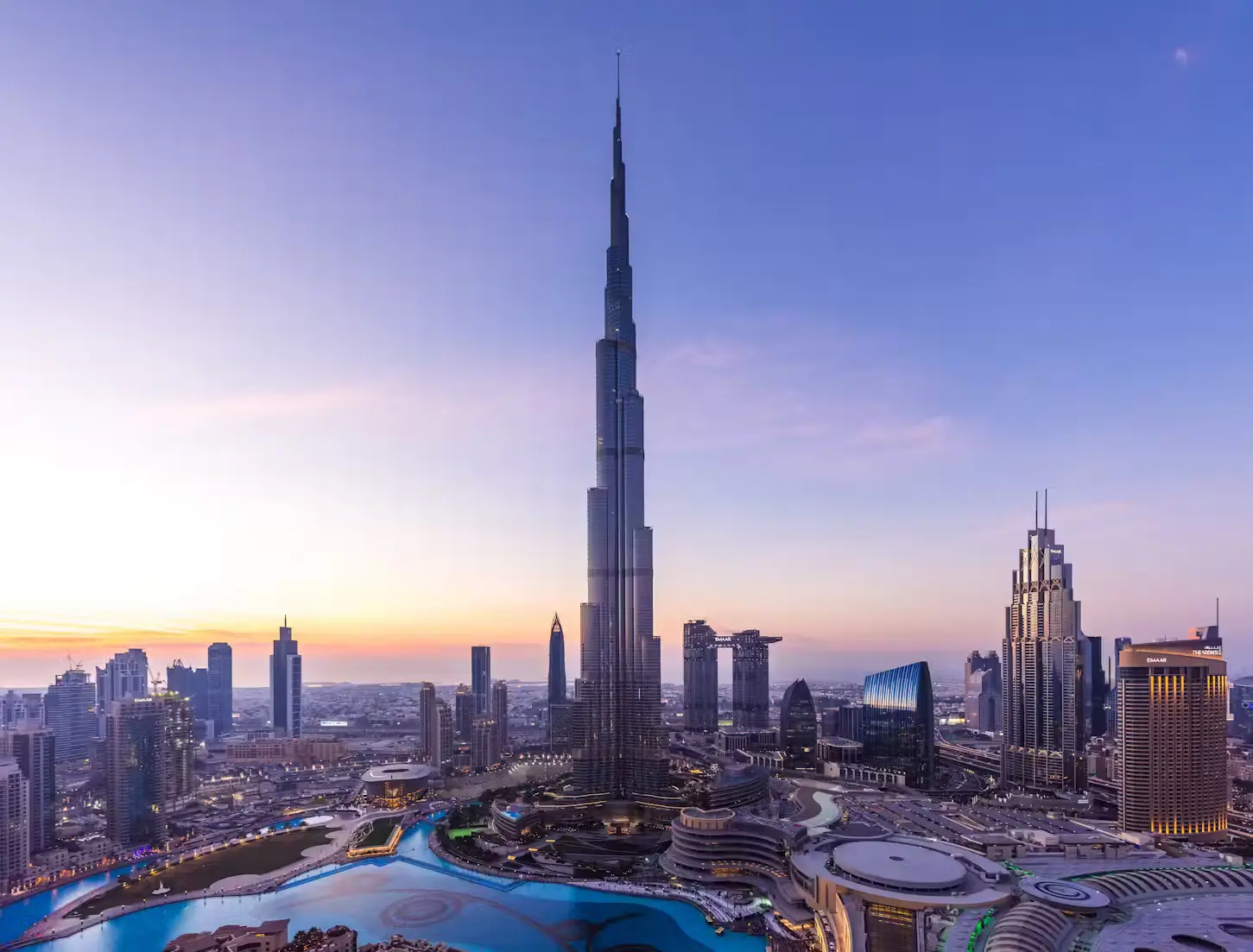
Burj Khalifa functions as a mixed-use skyscraper housing multiple programs across 163 floors. The building contains approximately 900 residential apartments occupying floors 19 through 108, corporate office space on floors 111-121, the Armani Hotel spanning levels B-8 through 39, observation decks at levels 124, 125, level 148, levels 152-154 and restaurants including At.mosphere at level 122, and mechanical floors serving the building’s operational systems. The structure accommodates roughly 10,000 people daily across these various uses.
The development strategy centered on economic diversification. Dubai’s government recognized that oil reserves would eventually deplete, requiring the emirate to establish alternative revenue sources. Burj Khalifa anchors Downtown Dubai, a $20 billion mixed-use development designed to attract international real estate investment, tourism, and position Dubai as a global financial hub. The tower’s height served strategic purposes—creating maximum floor area on limited downtown land, generating global media attention, and establishing Dubai as a city capable of world-record achievements.
Burj Al Arab as a Symbolic Luxury Hotel
Burj Al Arab operates exclusively as a luxury hotel containing 202 duplex suites. Every suite spans two floors, ranging from 169 square meters (the smallest) to 780 square meters (the Royal Suite). The building includes six restaurants—most notably Al Muntaha at 200 meters elevation (cantilevered 27 meters from the structure on each side) and Al Mahara featuring a million-liter seawater aquarium. The hotel employs a staff ratio of approximately eight dedicated employees per suite, with 24-hour butler service standard for all guests.
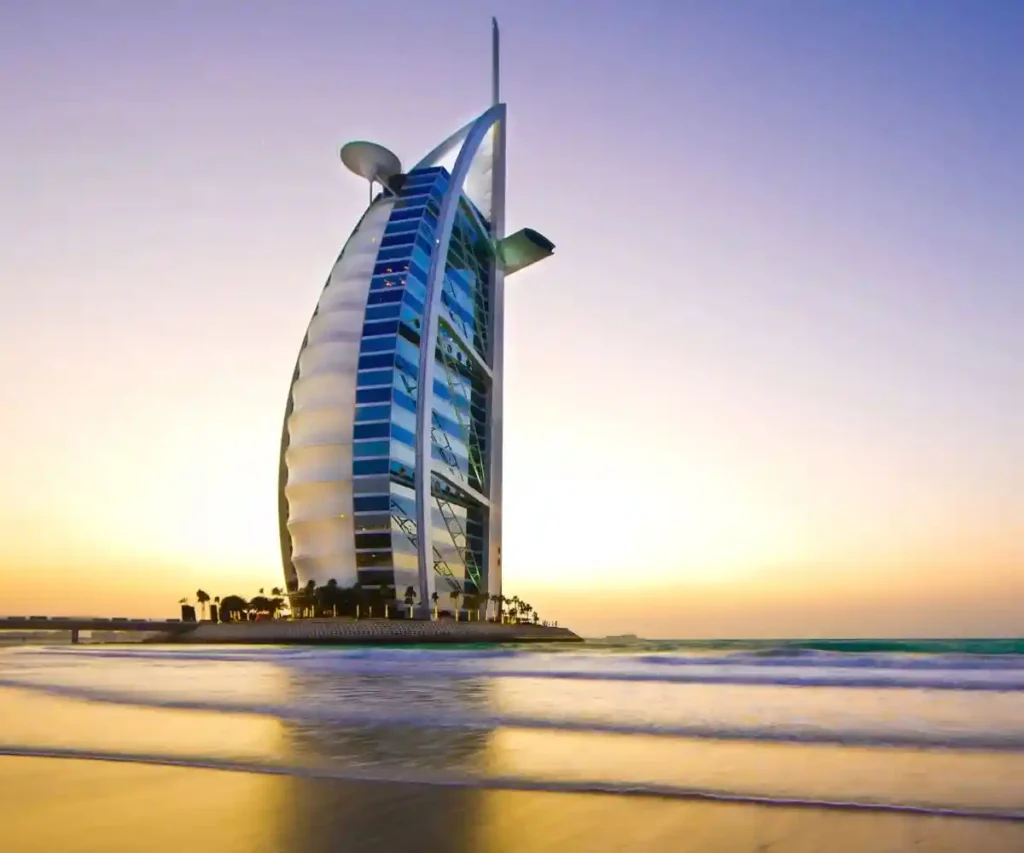
Burj Al Arab was conceived as a marketing symbol rather than an economically optimized structure. When architect Tom Wright of Atkins received the brief in 1993, the explicit goal was to create “an icon for Dubai—a building that would become synonymous with the place, as Sydney has its Opera House and Paris the Eiffel Tower.” The government wanted a structure that would generate international media coverage and establish Dubai as a luxury tourism destination. The hotel’s reported construction cost of $1 billion for only 202 rooms represents approximately $5 million per room—economically irrational for typical hotel development but strategically valuable for global brand recognition.
This purpose distinction determines every subsequent design decision, visitor experience, and operational model difference between the structures.
Architectural Design and Visual Identity
Both buildings employ iconic silhouettes recognizable globally, though achieving this through opposite design philosophies.
Burj Khalifa Architectural Concept and Form
Burj Khalifa was designed by Adrian Smith while at Skidmore, Owings & Merrill, with structural engineering by William F. Baker of SOM. The tower’s form derives from the Hymenocallis flower (spider lily) native to Middle Eastern deserts. The Y-shaped floor plan creates three wings extending from a hexagonal core, with each wing containing its own high-performance concrete walls and perimeter columns. This geometry maximizes corner office space and provides nearly every unit with exterior views.
The tower employs 27 setbacks arranged in a spiral pattern as it rises, with each tier reducing the building’s cross-sectional area. This stepped profile serves critical aerodynamic functions—disrupting organized wind patterns that could cause excessive lateral movement. The setbacks also reference the stepped minarets of Islamic architecture, creating cultural resonance beyond pure engineering necessity.
The façade consists of reflective glazing with aluminum and stainless steel spandrel panels and vertical tubular fins, creating a crystalline appearance that catches and reflects desert sunlight differently throughout the day. The curtain wall system comprises 142,000 square meters of glass designed to withstand Dubai’s extreme heat while minimizing solar gain.
Burj Al Arab Sail-Inspired Design
Burj Al Arab was designed by Tom Wright and engineered by Rick Gregory, both of Atkins (a British multinational engineering consultancy). The building’s sail shape references Dubai’s maritime heritage—specifically the spinnaker sail of a J-class yacht or the traditional Arab dhow vessel that historically dominated Gulf trade routes.
The structure consists of two V-shaped wings forming a “mast” with a massive 180-meter-tall atrium between them. This configuration creates dramatic interior space while presenting a narrow profile when viewed from certain angles, enhancing the sail impression. The north-facing façade features a double-skin Teflon-coated woven fiberglass membrane stretched over arched steel trusses. This translucent white membrane serves dual functions—filtering excessive heat and sunlight during the day while acting as a screen for colored LED illumination at night, when the tower cycles through various lighting schemes.
Exterior Façade and Material Expression
The exterior structural frame employs exposed diagonal steel bracing visible from outside, creating a high-tech exoskeleton aesthetic contrasting with the softer, billowing membrane. This juxtaposition of rigid engineering and fluid form establishes the building’s distinctive character.
Interior Design Philosophy and Luxury Language
Interior design further distinguishes the structures. Burj Khalifa employs contemporary modernism with clean lines, neutral colors, and extensive glass. Burj Al Arab’s interiors, designed by Khuan Chew of KCA International, embrace maximalist luxury—approximately 1,790 square meters of 24-carat gold leaf adorning surfaces, 24,000 square meters of marble (including rare Statuario marble used by Michelangelo), columns wrapped in gold leaf, jewel-tone color gradations, and baroque ornamentation. Every design decision emphasizes opulence rather than restraint.
Structural Engineering and Construction Methodology
The engineering approaches reveal how different building programs require different structural solutions.
Burj Khalifa Structural System (Buttressed Core)
Burj Khalifa employs a “buttressed core” structural system developed by William F. Baker. The central hexagonal core houses elevators and mechanical systems (except emergency stairs located in each wing). Each of the three wings functions as a high-performance concrete core with perimeter columns, effectively creating three separate buildings that buttress each other through the central hub. This configuration provides exceptional torsional resistance—critical for a structure experiencing high wind loads at extreme height.
The system uses reinforced concrete up to level 156, where it transitions to structural steel for the uppermost floors and spire. Concrete strengths reached C80 (80 megapascals compressive strength) in lower sections, with modulus of elasticity reaching 43,800 N/mm² at 90 days for vertical load-bearing elements. Putzmeister developed specialized concrete pumps capable of delivering material to heights exceeding 600 meters—in May 2008, concrete was pumped to a world record height of 606 meters for the 156th floor.
The foundation system consists of a 3.7-meter-thick reinforced concrete raft supported by 192 bored piles, each 1.5 meters in diameter extending 43 meters deep. Over 45,000 cubic meters of concrete were used for the foundation alone, weighing more than 110,000 tonnes. The foundation design was governed by settlement criteria rather than ultimate bearing capacity—the massive structure needed to settle evenly without tilting.
Construction required 22 million man-hours, 330,000 cubic meters of concrete, and 55,000 tonnes of steel reinforcement. The project maintained relatively consistent progress from excavation in January 2004 to opening in January 2010—approximately six years total construction time.
Burj Al Arab Structural System (Steel + Concrete Hybrid)
Burj Al Arab employs a hybrid steel and concrete structural system. The foundation required extraordinary measures due to construction on an artificial island in the Persian Gulf. The island itself took three years to construct (1994-1997), involving placement of massive rocks circled with a honeycomb-patterned concrete block system designed to dissipate wave energy and protect against a 100-year storm event. The island sits only 7 meters above water level—Tom Wright insisted on minimal height to create the impression of a sail rising directly from the sea.
Foundation Engineering and Ground Conditions
The hotel foundation consists of 230 concrete piles, each 1.5 meters in diameter, driven 45 meters into the seabed through driving and drilling methods. These piles transfer loads through coastal sediments to more stable substrata, ensuring the structure remains stable despite wave action and sandy soil conditions.
The superstructure above the island uses steel for the primary frame—two V-shaped trusses forming the building’s wings, connected by a central reinforced concrete spine. Large diagonal steel trusses brace the exterior frame, each measuring 85 meters long with triangular cross-sections. These trusses expand and contract up to 5 centimeters daily due to temperature changes, requiring special steering linkage systems to accommodate thermal movement without inducing stress.
The building contains 70,000 cubic meters of concrete and 9,000 tonnes of steel—significantly less material than Burj Khalifa, reflecting both the smaller scale and different structural approach. The fabric atrium wall consists of two skins of PTFE-coated fiberglass separated by a 500-millimeter air gap, pre-tensioned over trussed arches spanning up to 50 meters. This double-layer system manages positive wind pressure (spanning from truss to truss) and negative wind pressure (spanning laterally), while the air gap provides insulation.
Construction Timeline and Execution Complexity
Construction of the building itself (following island completion) required less than three years, with the hotel opening December 1, 1999. Peak construction employed 2,000 workers, with overall project involvement from 3,000 contractors, 250 designers, and 3,500 on-site workers. Total project cost is reported between $650 million and $1 billion, with the variance likely reflecting whether island construction costs are included.
Height and Scale: What the Numbers Mean
The height difference represents more than simple numerical superiority—it reflects entirely different engineering challenges and user experiences.
| Feature | Burj Khalifa | Burj Al Arab |
|---|---|---|
| Total Height | 828 m | 321 m |
| Floors | 163 | 28 (double-story suites) |
| Highest Occupied Floor | 585.4 m | ~200 m |
| Public Viewing Level | Levels 124, 125, 148 | None (restaurant access only) |
| Helipad Height | N/A | 210 m |
| Primary Function | Mixed-use skyscraper | Luxury hotel |
Burj Khalifa Height, Floors, and Public Levels
Burj Khalifa at 828 meters (2,717 feet to architectural top, 829.8 meters including antenna) contains 163 floors above ground. The highest occupied floor reaches 585.4 meters. At this height, the building penetrates well into the atmospheric boundary layer where wind speeds intensify and atmospheric conditions differ from ground level. The structure was designed to withstand wind speeds up to 240 km/h while limiting acceleration to levels preventing occupant discomfort.
The elevator system provides vertical transportation across this extreme height through zoning—passengers transfer between elevator banks at sky lobbies rather than individual elevators traveling the full height. The longest elevator runs reach approximately 140 floors (504 meters), requiring sophisticated systems managing rope weight, pressure differential, and passenger comfort. Observatory elevators travel at 10 meters per second, completing the journey from ground to level 124 (452 meters) in approximately 60 seconds.
From the highest observation deck at 555 meters (Level 148), visibility extends approximately 95 kilometers on clear days—sufficient to see across the entire emirate and into neighboring territories. The curvature of Earth becomes perceptible at this elevation. Atmospheric haze (common in Dubai’s desert environment) typically limits practical visibility to 30-50 kilometers, though winter days following rain can provide exceptional clarity.
Burj Al Arab Height and Spatial Distribution
Burj Al Arab at 321 meters (1,053 feet) contains 28 double-story floors accommodating 202 suites, though only 61% of the total height consists of occupiable space—39% serves mechanical, structural, and circulation functions. This high proportion of non-occupiable space results from the hotel’s architectural priorities emphasizing dramatic interior volume (the 180-meter atrium) and the sail silhouette over space efficiency.
The highest guest-accessible area is the Al Muntaha restaurant at 200 meters, cantilevered 27 meters beyond the building’s structural supports on either side. The helipad sits at 210 meters—famously used for publicity events including a 2005 tennis match between Roger Federer and Andre Agassi, and Red Bull stunt demonstrations. These events showcase the platform’s size and stability, though it serves primarily as emergency helicopter landing capability.
Atmospheric and Wind Conditions at Height
At 321 meters, atmospheric conditions remain within the typical urban boundary layer. Wind patterns, air pressure, and visibility conditions closely resemble those experienced by other tall buildings rather than the extreme conditions Burj Khalifa encounters at 800+ meters.
Scale Impact on Daily Occupancy and Use
The scale difference means Burj Khalifa processes vastly more people daily—10,000 building occupants plus thousands of tourists visiting observation decks. Burj Al Arab accommodates maximum 400-500 hotel guests plus dining visitors, creating an intimate luxury environment versus Burj Khalifa’s bustling vertical city.
Visitor Access and Experience Models
The structures employ fundamentally different approaches to public access, reflecting their core functions.
Burj Khalifa Observation Deck Experience
Burj Khalifa operates as a tourist attraction accessible through purchased tickets. The “At The Top” experience (Levels 124 and 125) costs AED 159-379 depending on time slot, with prime sunset hours commanding premium pricing. “At The Top SKY” (adding Level 148) costs AED 399-553. These tickets provide timed entry—visitors queue at designated time slots, undergo security screening, experience multimedia presentations about the tower’s construction, ride high-speed elevators, and spend 60-90 minutes on observation decks before descending.
Approximately 1.87 million tourists visited Burj Khalifa observation decks in 2019 (pre-pandemic), generating substantial revenue while requiring sophisticated crowd management systems. The observation deck model treats the building as a viewpoint for experiencing Dubai from above—visitors come specifically to see the city, desert, and Gulf from unprecedented height.
The experience emphasizes accessibility. Any visitor can purchase tickets online or at the tower, arrive at their scheduled time, and access observation decks regardless of whether they’re staying at the Armani Hotel or have any other connection to the building. This democratized access aligns with the tower’s role as a tourist landmark and Dubai’s broader tourism strategy.
Burj Al Arab Access Restrictions and Entry Options
Burj Al Arab functions as a private hotel restricting access to guests and dining/tour reservations. You cannot simply purchase a ticket to enter and explore—you must either book accommodation (suites starting around AED 4,000-5,000 per night), reserve a restaurant table (afternoon tea at AED 625+ per person, dinner typically AED 1,000+ per person), or purchase a guided tour.
The Inside Burj Al Arab tour costs AED 399 for adults and provides 90-minute access to select areas including the 25th floor, hotel suites, and restaurants, culminating in a gold-covered cappuccino at the Skyview Bar. The guided tour operates on scheduled times and limited capacity to prevent overwhelming the hotel environment.
This access model reflects the hotel’s positioning as an exclusive luxury property rather than a public tourist attraction. Burj Al Arab maintains its prestige partially through controlled access—the inability to casually enter reinforces exclusivity. The property serves hotel guests first, with dining and tour visitors accommodated to generate additional revenue without compromising the guest experience.
The practical result: visiting Burj Khalifa costs less (starting AED 159) and requires only showing up at your ticket time. Visiting Burj Al Arab requires minimum AED 625 expenditure (afternoon tea) or booking accommodation costing thousands of dirhams, plus advance reservation coordination.
| Feature | Burj Khalifa | Burj Al Arab |
|---|---|---|
| Entry Method | Ticket purchase | Hotel, dining, or tour booking |
| Cheapest Entry | ~AED 159 | ~AED 625 |
| Walk-in Allowed | Yes (with ticket) | No |
| Experience Type | Observation decks | Luxury dining / guided tour |
| Typical Visit Time | 60–90 minutes | 90–120 minutes |
| Accessibility | Open to all | Controlled / exclusive |
Location and Urban Context
Both structures occupy strategic locations serving different development objectives.
| Aspect | Burj Khalifa | Burj Al Arab |
|---|---|---|
| Location | Downtown Dubai | Jumeirah Coast |
| Setting | Urban core | Artificial offshore island |
| Metro Access | Yes | No |
| Nearby Attractions | Dubai Mall, Fountain | Madinat Jumeirah |
| Arrival Experience | City center | Private bridge |
Burj Khalifa and Downtown Dubai Integration
Burj Khalifa anchors Downtown Dubai, a 2-square-kilometer mixed-use development in the city center. The tower rises from the center of a master-planned community including Dubai Mall (the world’s largest shopping center by total area), the 11-hectare Burj Park, the Old Town Island residential district, and the Dubai Fountain (the world’s largest choreographed fountain system). This concentration of attractions creates synergy—tourists visiting Burj Khalifa also shop at Dubai Mall, watch fountain shows, and dine at surrounding restaurants, maximizing economic impact.
The location connects directly to Dubai Metro’s Red Line via the Burj Khalifa/Dubai Mall station, providing public transportation access. Sheikh Zayed Road, Dubai’s main artery, passes immediately adjacent, and Dubai International Airport sits 10 kilometers north—approximately 15 minutes by car under normal traffic conditions.
Downtown Dubai sits inland from the coast, centered within the broader metropolitan area. This central positioning reflects the development’s goal of creating a new city core around which Dubai would expand, rather than remaining concentrated along the coastal strip.
Burj Al Arab’s Offshore Island Placement
Burj Al Arab occupies an artificial island 280 meters offshore from Jumeirah Beach, connected to the mainland by a private curving bridge. The hotel sits 16 kilometers southwest of Downtown Dubai along the Jumeirah coast—the low-density beachfront residential area that was Dubai’s primary affluent neighborhood before downtown expansion.
The offshore location on a dedicated island provides several advantages for a luxury hotel: physical separation creates exclusivity and privacy, ocean views extend unobstructed in all directions, and the dramatic arrival experience (crossing the private bridge to an island-based hotel) enhances the sense of arriving somewhere special. The location also enabled the sail-shaped design—a tower rising from the sea rather than surrounded by other buildings creates clear visual dominance.
The Jumeirah Beach location places Burj Al Arab among other luxury hospitality developments but isolated from the city’s commercial and tourist activity centers. This reflects the hotel’s strategy—guests come specifically to experience Burj Al Arab itself, not to be near other attractions. The property offers helicopter transfers from Dubai International Airport (approximately 15 minutes) or Rolls-Royce limousine service via the 25-kilometer road journey.
Cost Analysis: Construction vs Visitor Expenses
The financial frameworks reveal different development economics.
Burj Khalifa Construction Cost and Revenue Model
Burj Khalifa construction cost approximately $1.5 billion. The broader Downtown Dubai development required $20 billion investment. Developer Emaar Properties financed the project through a combination of corporate funds, pre-sale revenues from residential units, and eventually bailout support from Abu Dhabi’s government when the 2008 financial crisis created liquidity problems (resulting in renaming from Burj Dubai to Burj Khalifa to honor Sheikh Khalifa bin Zayed Al Nahyan).
The construction cost per square meter—approximately $4,850 based on 309,473 square meters of space—represents efficient spending for a supertall tower given the engineering complexity, premium materials, and technological systems required. The building generates revenue through residential sales, office leases, hotel operations, retail rent, observation deck tickets, restaurant operations, and parking, creating diversified income streams.
For visitors, Burj Khalifa offers relatively accessible pricing. At The Top tickets start at AED 159 (approximately $43) for non-prime hours, making the experience affordable for middle-income tourists. Even premium SKY tickets at AED 399 ($109) compete favorably against other major global observation decks when adjusted for purchasing power and experience quality.
Burj Al Arab Construction Cost and Symbolic Value
Burj Al Arab construction reportedly cost between $650 million and $1 billion (sources vary based on whether island construction is included). Using the higher figure of $1 billion for 202 suites yields approximately $5 million per room—extraordinarily high compared to typical luxury hotel development at $500,000-1,000,000 per room. This reflects both the architectural ambition and the reality that much of the building’s volume serves dramatic spaces (the 180-meter atrium) rather than revenue-generating rooms.
The construction economics only make sense when considering the hotel’s role as marketing asset rather than pure accommodation business. The global media coverage, brand recognition, and Dubai tourism promotion generated by Burj Al Arab’s iconic status deliver value impossible to quantify through room revenue alone. The structure functions as a three-dimensional advertisement for Dubai’s ambitions.
Visitor Pricing and Budget Comparison
For visitors, Burj Al Arab requires significant expenditure. Accommodation in the smallest suite typically starts around AED 4,000-5,000 ($1,100-1,400) per night, with the Royal Suite reaching AED 75,000+ ($20,000+) per night. The entry-level afternoon tea at AED 625 ($170) per person represents the minimum spending required to access the property, while restaurant dinner experiences range from AED 1,000-2,000+ ($275-550+) per person.
The cost differential means Burj Khalifa attracts mass tourism—any visitor to Dubai with moderate budget can experience the observation decks. Burj Al Arab targets ultra-high-net-worth individuals and aspirational luxury travelers willing to spend substantially for exclusive experiences.
Engineering Innovations and Technical Achievements
Both projects pushed engineering boundaries, though in different directions.
| Engineering Aspect | Burj Khalifa | Burj Al Arab |
|---|---|---|
| Structural System | Buttressed core | Steel + concrete hybrid |
| Primary Material | Reinforced concrete | Steel + concrete |
| Foundation Type | Piled raft | Piled artificial island |
| Wind Strategy | Spiral setbacks | Aerodynamic sail form |
| Construction Duration | ~6 years | ~3 years (after island) |
Records and Breakthroughs of Burj Khalifa
Burj Khalifa established multiple world records: tallest freestanding structure, highest number of stories, highest occupied floor, tallest service elevator installation, and longest elevator travel distance. The buttressed core structural system developed for the project has influenced subsequent supertall tower design globally.
Wind Engineering and Concrete Pumping Advances
Wind engineering represented a critical challenge. Extensive wind tunnel testing at RWDI’s facility in Canada refined the tower’s form to disrupt vortex shedding patterns that could cause excessive lateral movement. The spiral setback geometry “confuses the wind” by preventing organized vortex formation—as air flows around the building, each tier presents a different shape, preventing synchronized pressure patterns.
The concrete pumping achievement deserves emphasis. Delivering viscous concrete vertically to 600+ meters against gravity required developing new pumping technology and concrete mix designs. The pumped concrete needed to maintain workability during the ascent while achieving specified strength after placement. Pumping occurred primarily at night when cooler temperatures prevented premature setting.
The building’s curtain wall—142,000 square meters of reflective glazing—was designed to withstand Dubai’s extreme summer temperatures (up to 50°C ambient) while minimizing solar heat gain and maintaining occupant comfort. The double-glazed system with energy-saving silver coating, automated external sun shades, and building management controls creates one of the world’s most advanced climate-responsive building envelopes.
Fabric Architecture and Cantilever Engineering at Burj Al Arab
Burj Al Arab pioneered vertical applications of double-skin fabric architecture. The Teflon-coated woven fiberglass membrane stretched across 50-meter arched trusses represented the first time such technology was used vertically at this scale. The system needed to handle both positive wind pressure (membrane spanning between trusses) and negative pressure (lateral spanning), while accommodating thermal expansion of the steel trusses (up to 5 centimeters daily movement).
The cantilevered Al Muntaha restaurant structure—extending 27 meters beyond the building’s support on each side at 200 meters elevation—required precise engineering to ensure stability under wind loads, thermal cycling, and floor vibrations from restaurant activity. The cantilever uses a full-depth steel truss system transferring loads back to the central concrete spine.
Island Construction and Marine Engineering
The island construction itself represented significant engineering. Creating stable ground for a 321-meter tower on saturated coastal soil required driving 230 piles 45 meters into the seabed, then constructing a honeycomb-patterned concrete block wave dissipation system protecting the island from storm surge. The island needed to withstand 100-year storm conditions while remaining low enough (7 meters above sea level) to create the intended visual effect of a sail rising from water.
The building’s lighting system consists of 150 color-changing LEDs and 90 Data Flash strobes, creating the nightly illumination displays that have become part of Dubai’s coastal identity. At 14,000 channels, it was the largest architectural lighting control system when installed, with individual suites containing up to 160 lighting control channels allowing customized ambiance.
Current Status and Tourism Integration
Both structures have evolved into mature tourist offerings with distinct roles in Dubai’s attraction ecosystem.
Burj Khalifa as a Global Tourism Anchor
Burj Khalifa attracts approximately 1.5-2 million annual visitors to observation decks, making it among the world’s most-visited paid attractions. The structure has maintained its status as world’s tallest building for 16 years (opened January 4, 2010), though Jeddah Tower in Saudi Arabia (under construction, planned height exceeding 1,000 meters) will eventually surpass it.
The building integrates tightly with Dubai Mall (approximately 80 million annual visitors) and the Dubai Fountain (free shows every 30 minutes evening, drawing massive crowds). This clustering creates a tourism concentration where visitors spend 4-6 hours experiencing multiple attractions in a single area. Tour operators typically combine Burj Khalifa observation deck tickets with Dubai Mall visits and fountain viewing in half-day excursion packages.
The tower’s observation decks have become essential components of Dubai tourism packages. Package tours, cruise ship excursions, and independent travelers consistently rank Burj Khalifa among Dubai’s must-visit attractions alongside the Dubai Mall, Gold Souk, and desert safaris.
Burj Al Arab as a Photographic and Luxury Landmark
Burj Al Arab functions as a photographic landmark more than a direct tourist attraction. Thousands of visitors photograph the building daily from Jumeirah Public Beach, the nearby Madinat Jumeirah complex, and various coastal vantage points—experiencing the structure’s visual impact without entering. This “photograph from outside” tourism generates destination value without requiring property access.
For visitors willing to spend on hotel dining or tours, Burj Al Arab provides ultra-luxury experiences emphasizing exclusivity, service quality, and interior opulence. Afternoon tea bookings consistently sell out weeks in advance during peak tourism season (November-March), indicating strong demand despite high pricing.
The hotel has maintained its “world’s most luxurious hotel” reputation for 25 years since opening. While other properties now compete in the ultra-luxury segment (Atlantis The Royal, Bulgari Resort Dubai), Burj Al Arab’s iconic architecture and first-mover status preserve its unique position. The property underwent renovations in 2018-2019 updating interiors and technical systems while maintaining the signature gold-and-marble aesthetic.
Which Should Visitors Choose?
The decision depends entirely on travel priorities and budget parameters.
Choose Burj Khalifa if you prioritize:
- Experiencing the world’s tallest building and viewing Dubai from record-breaking height
- Accessible pricing (AED 159-399 for observation deck access)
- Mass tourism comfort—structured, predictable visitor experience with clear timing and logistics
- Photography opportunities capturing Dubai’s urban development, desert interface, and coastal geography
- Proximity to Dubai Mall, Dubai Fountain, and downtown attractions
- Ability to visit without advance planning (though advance booking recommended for preferred times)
The Burj Khalifa experience emphasizes altitude achievement and panoramic viewing. You visit to see Dubai from above and appreciate the engineering accomplishment of the world’s tallest structure. The experience delivers consistently on this promise—observation decks are well-managed, views are genuinely spectacular, and the price-to-experience ratio proves reasonable.
Choose Burj Al Arab if you prioritize:
- Ultra-luxury hospitality and experiencing one of the world’s most exclusive hotels
- Architectural appreciation—the sail-shaped design offers more distinctive visual character than Burj Khalifa’s relatively conventional tower form
- Fine dining in dramatic settings (Al Muntaha restaurant, Skyview Bar)
- Intimate, exclusive environment with personalized service
- Willingness to spend substantially (minimum AED 625 for afternoon tea, AED 4,000+ for accommodation)
- Photography of an iconic structure (many visitors photograph from outside rather than entering)
The Burj Al Arab experience emphasizes luxury, exclusivity, and design. You visit to experience elite hospitality in an architectural icon. The property delivers exceptional service quality and memorable environments, though whether this justifies the cost remains subjective to individual value assessments.
Experiencing Both Without Redundancy
Dubai tourism packages increasingly combine both landmarks recognizing they offer complementary experiences. Combo tickets provide 15-20% savings versus separate purchases. A typical itinerary might include:
- Morning or afternoon: Burj Khalifa observation deck visit (1.5-2 hours including queue time)
- Late afternoon: Dubai Mall shopping and exploration
- Evening: Dubai Fountain show viewing
- Following day: Burj Al Arab afternoon tea reservation or restaurant dining experience
This approach captures both the mass tourism spectacle of Burj Khalifa and the exclusive luxury of Burj Al Arab without redundancy. Many visitors photograph Burj Al Arab from Jumeirah Beach (free) rather than paying for interior access, finding the exterior view satisfies their desire to experience the landmark.
Understanding the “Seven-Star” Myth
Burj Al Arab’s marketing as a “seven-star hotel” requires clarification as it reflects common misconception.
No official hotel rating system awards seven stars. The standard international rating scales—Forbes Travel Guide’s Five-Star system, AAA’s Five-Diamond ratings, and various national systems—maximum at five stars or five diamonds. Burj Al Arab holds official five-star designation.
The “seven-star” term originated from journalist reaction at the hotel’s 1999 opening. A British journalist visiting before official opening reportedly felt the standard five-star rating inadequately described the property’s opulence, declaring it deserved “seven stars.” Media outlets repeated this characterization, and it became embedded in global perception despite lacking official status.
Jumeirah Group (Burj Al Arab’s owner and operator) has explicitly stated they never marketed the property as seven-star. A company spokesperson acknowledged: “There’s not a lot we can do to stop it. We’re not encouraging the use of the term. We’ve never used it in our advertising.”
The persistence of the “seven-star” label reveals effective accidental marketing. The unauthorized designation creates mystery, positions the hotel as transcending normal luxury categories, and generates media discussion. Burj Al Arab benefits from the enhanced mystique without officially making unsupportable claims.
Current luxury hospitality operates in increasingly competitive context, with properties like Atlantis The Royal Dubai, Bulgari Resort, and others offering comparable service levels and amenities. Burj Al Arab maintains its distinctive position primarily through architectural icon status rather than service quality differentials.
The Broader Context: Dubai’s Architectural Ambitions
Both structures exemplify Dubai’s development strategy of using landmark architecture to achieve multiple objectives simultaneously.
Tourism generation: Iconic buildings attract global attention, appearing in travel media, social media, and popular culture, creating destination awareness that drives visitation. The economic impact extends beyond the structures themselves—tourists visiting Burj Khalifa or photographing Burj Al Arab also patronize hotels, restaurants, shops, and other attractions, creating multiplier effects throughout the economy.
Real estate value creation: Landmark developments increase surrounding property values. Residential units near Downtown Dubai command premium pricing partially due to proximity to Burj Khalifa. The Jumeirah coastal area’s luxury real estate values benefit from Burj Al Arab’s presence and the area’s established prestige.
Global brand building: Architecture functions as three-dimensional advertising. Burj Khalifa’s world-record status and Burj Al Arab’s distinctive silhouette appear in media coverage, establishing Dubai’s identity as a city of superlatives—tallest, most luxurious, most ambitious. This brand positioning attracts investment, tourism, and talent.
Economic diversification: Both projects formed part of Dubai’s strategic shift from oil dependence to service economy. Tourism, real estate, finance, and trade now generate the majority of Dubai’s GDP, with architecture playing crucial enabling roles in this transformation.
Regional competition: Within the Gulf Cooperation Council, cities compete for tourism, investment, and global attention. Dubai’s architectural landmarks differentiate it from Abu Dhabi, Doha, Kuwait City, and other regional centers, establishing specific identity in competitive context.
The strategy has proven remarkably successful. Dubai attracted approximately 17.55 million international visitors from January 2025 till November 2025.
The Essential Distinction: Burj Khalifa Vs Burj al Arab
Burj Khalifa’s Role as an Engineering Achievement
Burj Khalifa and Burj Al Arab ultimately represent two different answers to the question: “How can architecture serve national development objectives?”
Burj Khalifa chose the path of maximum achievement—build taller than anyone has ever built, creating an engineering accomplishment that demonstrates technical capability and ambition. The structure optimizes for multiple functions within a single tower, creating a vertical city that generates diverse revenues while establishing world records that capture global attention.
Burj Al Arab’s Role as an Iconic Symbol
Burj Al Arab chose the path of maximum distinctiveness—create a building so visually unique and luxuriously appointed that it becomes instantly recognizable globally. The structure sacrifices economic efficiency for architectural impact, functioning as marketing tool as much as operational hotel.
Why Neither Is “Better” — Only Different
Both strategies succeeded in their objectives. Burj Khalifa stands as the world’s tallest building 16 years after opening, continues operating successfully across residential, commercial, and tourism programs, and remains Dubai’s defining landmark. Burj Al Arab established itself as an architectural icon within years of opening, maintains its luxury positioning despite increasing competition, and generates tourism value far exceeding what 202 hotel rooms could normally justify.
For visitors to Dubai, understanding this fundamental difference clarifies the choice between experiencing one or both landmarks. Burj Khalifa offers altitude, panoramic views, and engineering accomplishment. Burj Al Arab offers architectural distinctiveness, exclusive luxury, and design-forward experience. Neither is objectively “better”—they serve different purposes and satisfy different priorities.
The enduring lesson from both structures: iconic architecture can serve as infrastructure for economic development when it successfully generates global recognition, attracts tourism, and creates destination value extending beyond the building’s immediate functions. Dubai’s bet on landmark architecture as development strategy has proven remarkably effective, inspiring imitators globally while establishing the emirate as a capital of architectural ambition.
FAQs
This article compares Burj Khalifa and Burj Al Arab, two of Dubai’s most iconic landmarks built for very different purposes. Burj Khalifa, at 828 meters, is the world’s tallest building and functions as a mixed-use vertical city with residences, offices, hotels, and public observation decks. Burj Al Arab, standing 321 meters tall, is an ultra-luxury hotel designed as a symbolic architectural icon rather than a height-focused structure.
The comparison shows that Burj Khalifa prioritizes scale, engineering innovation, and public accessibility, while Burj Al Arab emphasizes exclusivity, design identity, and luxury hospitality. Together, they illustrate how Dubai uses landmark architecture to combine global branding, tourism, and economic diversification.


